There’s something about an antique mirror that feels instantly storied. Each one carries its own patina, gilded frame, and a sense of history that modern reproductions can’t quite replicate. Over the years, I’ve slowly curated a collection of antique mirrors, adding one at a time until I had the perfect little wall grouping. It wasn’t rushed, and that’s part of the magic.
In this post, I’ll share what to look for when sourcing antique mirrors, how to prepare and hang them safely, and a few tips for arranging them into a designer-worthy grouping that feels intentional and timeless.

Sourcing Antique Mirrors for a Wall Grouping
The joy of antique mirror wall groupings is in the hunt. You don’t need to find three matching pieces all at once — in fact, the best groupings are layered together over time.
What to look for:
-
Unique Frames: Gilded, carved, or painted frames with age and detail add character. Don’t be afraid of chips or worn edges — imperfections tell the story.
-
Interesting Shapes: Mix rectangular, oval, and ornate silhouettes for variety.
-
Patina & Glass: Old mirrors often have foxing (tiny speckles) or muted reflections that add charm.
- Inspect the backside : often this is where you’ll see the true signs of wear and tear. Look for old construction of the mirror frame or nails, an antique backing or paper, and a vintage style hanging element. This is the best way to spot a reproduction.
-
Look for Damage: especially with these gilded antique mirrors, it’s hard to find ones that don’t have cracks, imperfections in the mirror glass or that are chipping & crumbling away. Look for damage but also remember that a little wear and tear doesn’t still mean it has character. Just know what you’re willing to accept.

Antique shops, flea markets, and estate sales are the best places to stumble upon these treasures in person. Etsy and Charish are some of my favorite sites for finding true antique mirrors online, too. We don’t carry mirrors (yet!) over the the Heirloomed Vintage Goods shop, but hey, you never know. Go slow, collect with intention, and wait until the right piece speaks to you.
want the look? here is a roundup of antique mirrors, some old & some new


 How to Prep and Clean Antique Mirrors
When you bring an antique mirror home, resist the urge to over-clean. Too much scrubbing can damage old glass and delicate frames.
-
Dust First: Use a soft brush or microfiber cloth.
-
Gentle Cleaning: Lightly dampen a cloth for the glass only — never saturate. Use a non-hard cleaner, like a mix of water and vinegar to leave a streak-free appearance but not be damaging to the glass
-
Frame Care: Avoid harsh cleaners on wood or gilt; a gentle dusting is enough.
If the mirror’s backing or hanging hardware feels fragile, reinforce it before hanging.

Hanging Antique Mirrors Safely
Antique mirrors are often heavier than modern ones, so hanging them securely is essential.
-
Use anchors or studs for support.
-
Hang large mirrors with two hooks to distribute weight.
-
Keep mirrors at eye level and just a few inches apart for cohesion.
- Estimate or properly weigh your mirror and get hangers & hanging wire that matches the proper weight for your piece.
A little extra care here ensures your grouping will last for years without worry. Remember, a broken mirror is bad luck, right?
some handy tools for hanging an antique mirror
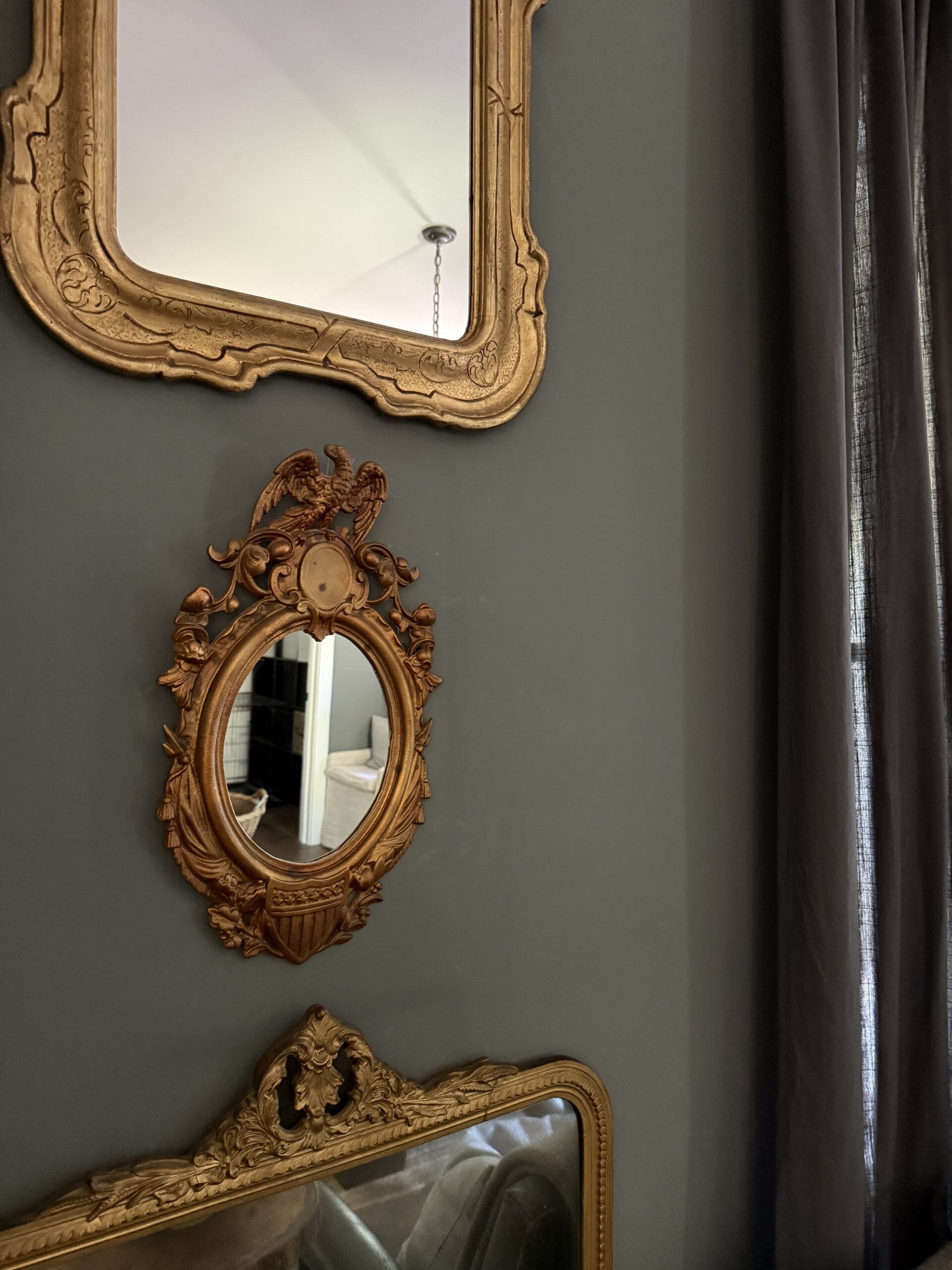
How to Arrange Antique Mirror Wall Groupings
The arrangement is where your creativity comes in. Think of your mirrors as artwork:
-
Play With Scale: Anchor the display with the largest mirror and layer smaller ones around it.
-
Mix Shapes & Frames: Combine rectangles, ovals, and ornate frames for balance.
-
Use Odd Numbers: Three or five mirrors feel more natural than even numbers.
-
Balance Space: Step back to check proportions — not too crowded, not too sparse.
The best arrangements look collected over time, not overly styled.
Why Antique Mirror Groupings Work
An antique mirror wall grouping isn’t just decor — it’s a story. Each mirror reflects more than your home; it reflects history, craftsmanship, and memory. Whether hung in an entryway, dining room, or tucked into a cozy corner, these groupings add depth and soul to your space.