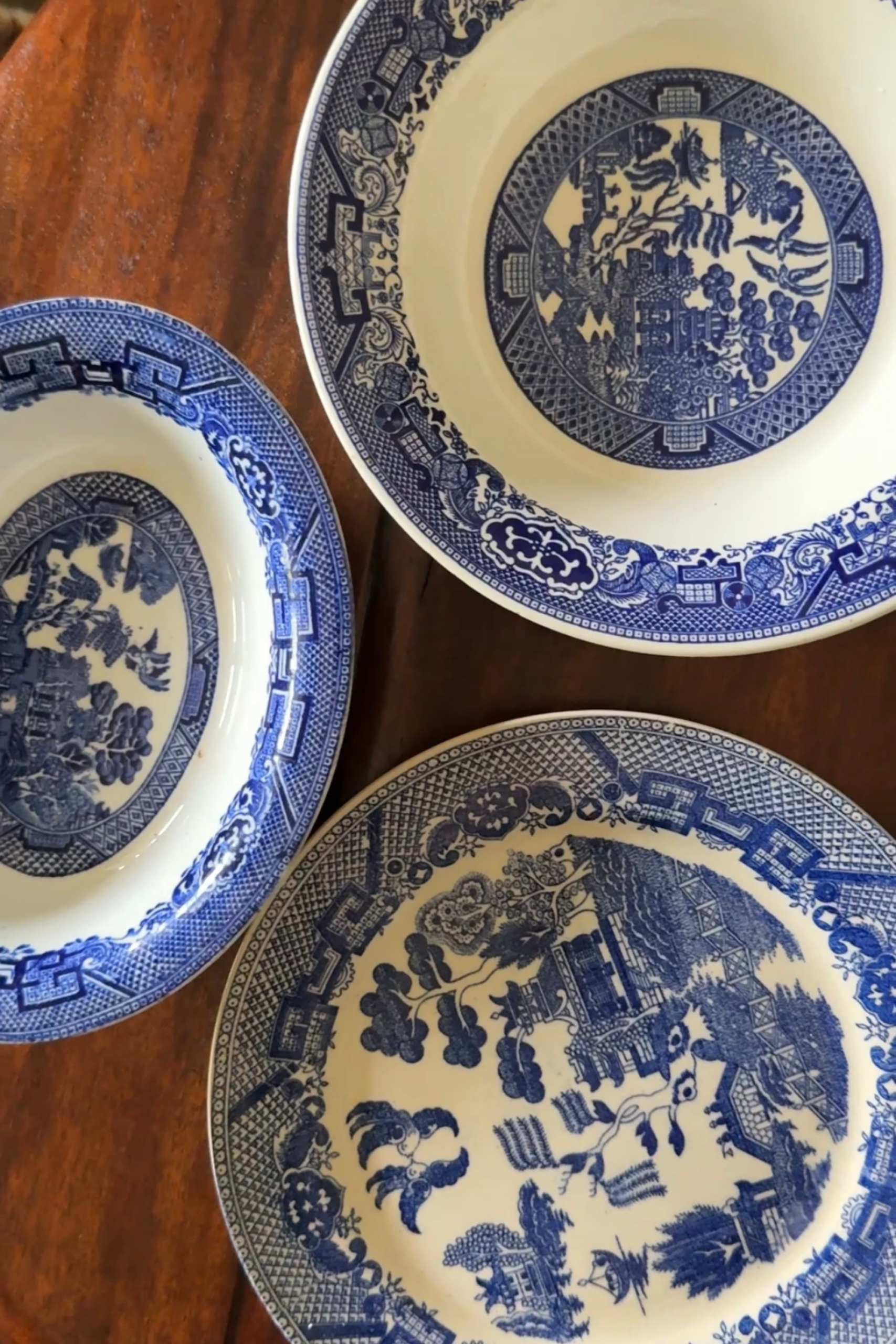
There are certain pieces that seem to follow you through life. A plate on your grandmother’s table, a pattern tucked into the back of a cabinet, a familiar shade of blue that feels both classic and quietly nostalgic. For many, that piece is Blue Willow.
Shop our Blue Willow Collection
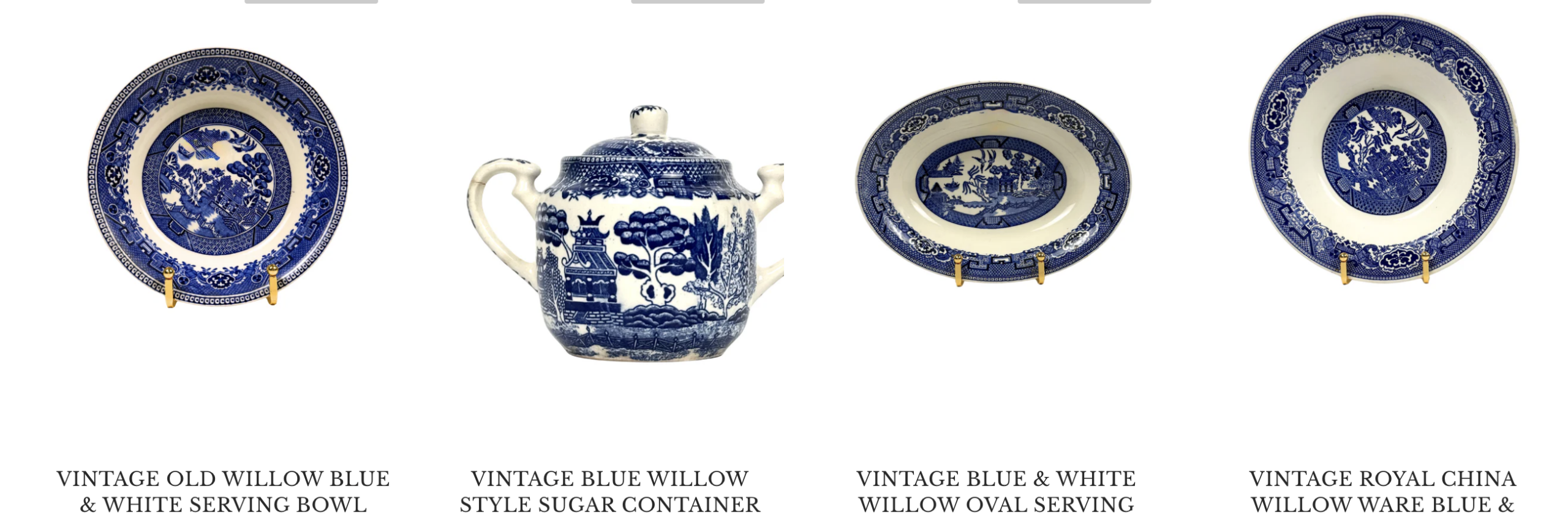
It is one of the most recognizable patterns in the world, but what makes it endure is not just the design itself. It is the story it carries and the way it layers into a home over time. Blue Willow has a way of making everyday objects feel collected rather than decorated, as if they have always belonged.
My Grandmother had a fondness for asian design elements and had the Chinoise style woven into her interiors always, so this pattern has a special place in my heart because it reminds me of her style of decorating.
The History and Story Behind Blue Willow
Blue Willow was first created in England in the late eighteenth century, during a time when European potters were deeply inspired by Chinese porcelain. Factories like Spode and Minton began producing transferware, a technique that allowed detailed designs to be transferred onto ceramics using engraved plates. Blue became the defining color, both for its beauty and for how well it translated through this printing process.
You will often hear the term Spode Blue Willow, which refers to some of the earliest and most historically significant versions of the pattern, and remains a benchmark for collectors today.
The pattern itself tells a romantic story. A young couple forbidden to be together escapes across a bridge, pursued by the woman’s father. In the end, they are transformed into birds so they can remain together forever. Whether the story came before the pattern or followed it, the imagery remains consistent and instantly recognizable once you begin to notice it.
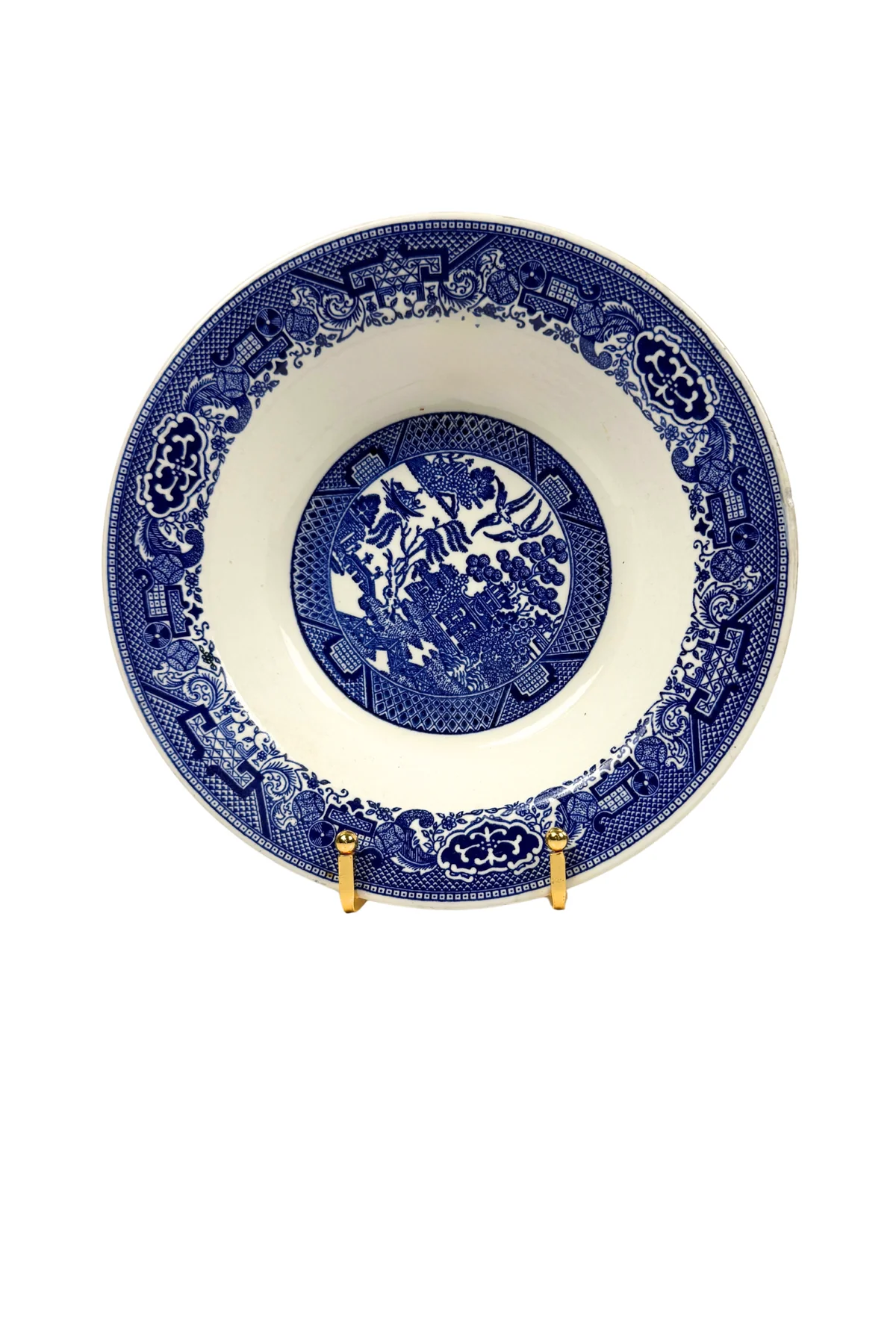
The Key Elements of the Blue Willow Pattern

How to Identify Blue Willow China
If you have ever turned over a plate to try to understand what you are holding, you are not alone. Blue Willow has been produced for more than two hundred years, which means not every piece is antique and not every piece carries the same value.
The back of a piece often tells part of the story. You may find maker’s marks such as Spode, Johnson Brothers, Churchill, or Homer Laughlin, along with a country of origin. Pieces marked England are often earlier, while those marked Made in Japan typically date to the early to mid twentieth century.
The quality of the transfer can also offer clues. Older pieces tend to have a softness to them, with slight blurring and variation in ink density. Newer pieces are more uniform and crisp. The color itself can vary as well, ranging from deep cobalt to softer navy tones that have gently faded over time.

How to Tell If Blue Willow Is Old
Age shows up in quiet ways. You may notice light crazing in the glaze, subtle wear along the edges, or slight discoloration from years of use. These are not imperfections to be avoided. They are what give a piece its character and sense of history.
Older Blue Willow tends to feel softer in both tone and detail, while newer pieces appear brighter and more consistent. Learning to recognize these differences is part of what makes collecting so enjoyable.
You can also look for further clues in the makers mark on the back. For example, after 1891 import/export laws required makers specify and include the country of origin on the back of each piece, so if you notice “England” on the backside then chances are the piece is from that date or later.

Blue Willow Makers to Know
While many companies have produced Blue Willow over the last two centuries, a few names stand out for both their history and collectability. Spode is one of the earliest and most important makers, often considered the originator of the Blue Willow pattern as we know it today. Early English pieces, especially those tied to Spode and other Staffordshire potteries, tend to be the most sought after by collectors.
Johnson Brothers created widely loved versions that feel classic and approachable, often found in homes and passed down through generations. Churchill continues to produce Blue Willow today, offering a more accessible, everyday option that still honors the traditional design. Homer Laughlin introduced an American interpretation, which remains popular and widely collected.
Pieces often described as Staffordshire Blue Willow are especially collectible, as they trace back to the region in England where many of the original potteries operated.
You will also often see the term “Willow Ware,” which was used more broadly across different manufacturers, particularly in the early to mid twentieth century. It became a way to describe Blue Willow style pieces & the pattern itself rather than tying them to one specific maker.
Another detail to look for is the word “Royal” within a maker’s name. Many English pottery companies incorporated “Royal” into their branding, such as Royal Staffordshire or Royal China, but this does not always indicate a single maker or guarantee age. Instead, it reflects a naming tradition used across multiple factories, particularly in England but also US. Learning to distinguish between these variations is part of what makes collecting Blue Willow so interesting.

When sourcing pieces, we look closely at both the maker and the overall character of the piece, choosing those that feel timeless and well suited to a collected home. You can explore our curated assortment of vintage Blue Willow china to see how these variations come together, I always include a shot of the makers mark on the back so you can see for yourself.
What Is Blue Willow Worth
Blue Willow is one of those rare patterns that sits at the intersection of accessibility and true collectability. While it is widely available, certain pieces carry real value, especially those with age, provenance, and strong maker attribution.
Earlier English pieces, particularly those produced in the nineteenth century or tied to notable makers like Spode and other Staffordshire potteries, tend to be the most valuable. These pieces often have a softer transfer, richer depth of color, and the kind of presence that only comes with time. They are not just decorative, they are genuinely collectible.
More common twentieth century pieces, including those marked Japan or later American production, are typically more accessible in price but still highly desirable for everyday use and layering. This is part of what makes Blue Willow so appealing. It allows you to build a collection over time, mixing more valuable antique pieces with approachable vintage finds.
In general, you may find:
- Everyday plates and small dishes ranging from $10 to $40
- English transferware and older marked pieces ranging from $50 to $150 or more
- Larger serving pieces, platters, and rarer forms reaching higher depending on condition and maker
The real value, though, is not just in rarity or price. It is in how the pieces live together. A collected stack of plates, a well worn serving platter, or a mix of tones and makers layered onto a table creates something far more meaningful than a perfectly matched set.
If you are looking for pieces that have already been thoughtfully sourced and selected, you can browse our antique and vintage Blue Willow collection to start or grow your own.
A Closer Look at Blue Willow
If you want to go deeper into the story, the symbolism, and how to recognize different variations of Blue Willow, I recently shared a closer look over on Instagram where I walk through the details in hand.
In that reel, I talk through the differences you will notice across makers, how to spot Willow Ware versus earlier English pieces, and what to look for when you are sourcing in person.
You can watch it here:
Watch the Blue Willow Reel on Instagram
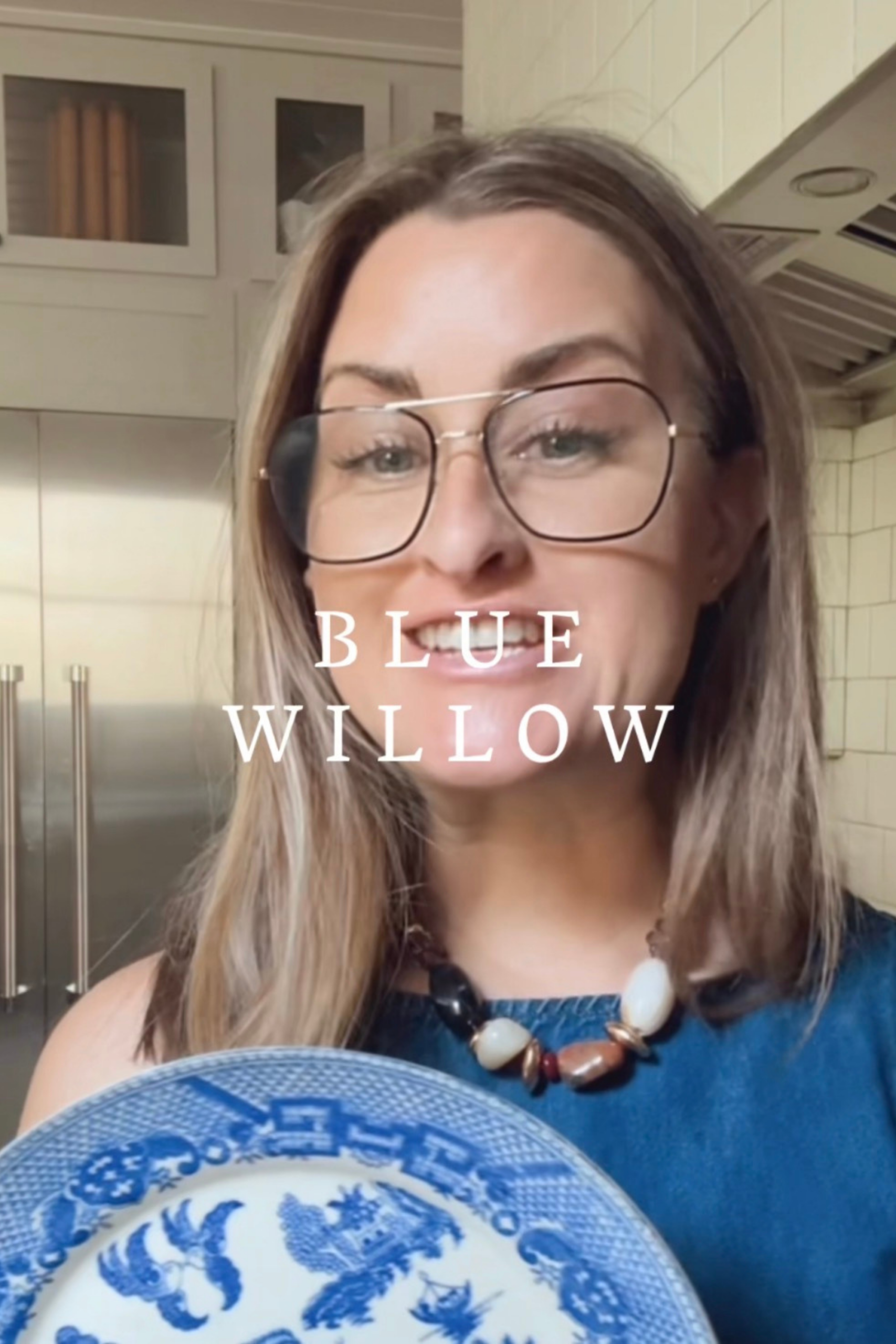
It is one of those patterns that becomes even more interesting the more you study it, especially once you begin to recognize the subtle differences that tell you where a piece came from and how it was made.
A Pattern That Becomes Part of Your Story
Blue Willow is one of those patterns that never really leaves. Not because it is trending, but because it has always been present. It carries a sense of familiarity and history that makes it easy to live with. Over time, it becomes less about the pattern itself and more about the life built around it. If you find yourself drawn to it, you likely already understand why.
We curate vintage Blue Willow pieces meant to be mixed, layered, and used every day. Each one is chosen for its tone, character, and ability to fit seamlessly into a collected home.
Shop our Blue Willow Collection