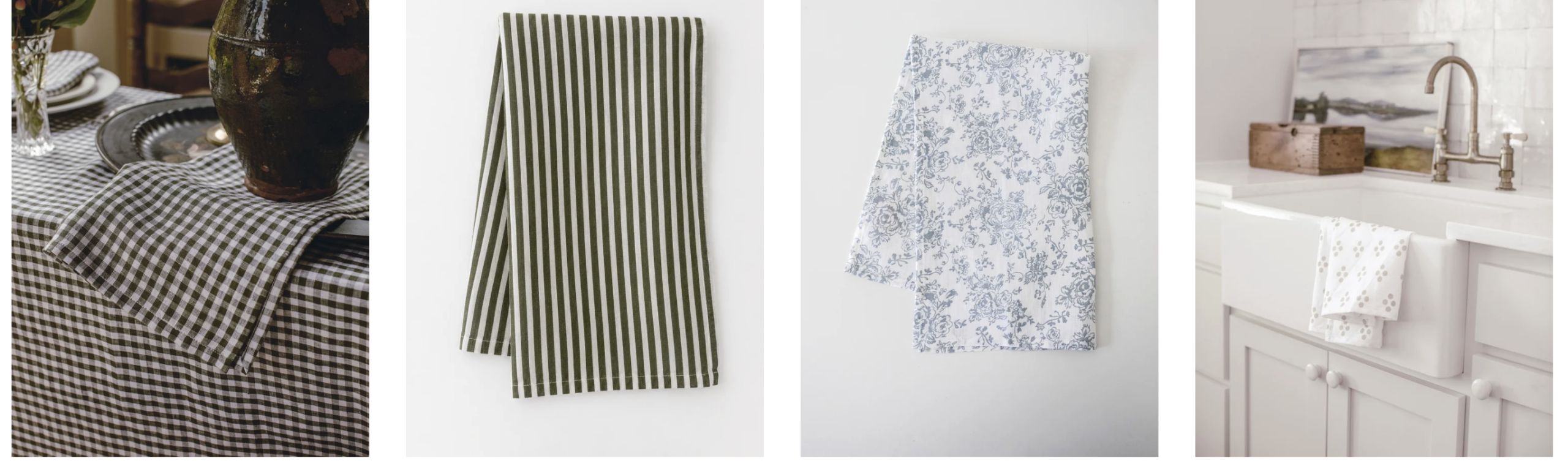
Whether you call them tea towels, kitchen towels or dish towels, these hardworking little linens have a way of multiplying over the years.
I happen to love tea towels. I mean, they are a huge part of my product assortment over at Heirloomed. Some are vintage, some have been collected along the way, and most are designs from my own Heirloomed textile collections. They’re one of those simple, everyday things I believe should be both beautiful AND useful.
Stacking tea towels in a drawer never worked very well for me. I’d inevitably reach for one somewhere in the middle, the entire stack would tumble over, and the towels at the bottom would rarely get used. The drawer always ends up in shambles and I can never find what I’m looking for. And probably even more frustrating, they’re all so pretty and you’d never know it when you open the sloppy drawer.
My solution for this problem couldn’t be simpler. I roll them.
If you’re wondering how to store kitchen towels so you can actually see and use what you have, this simple method has completely changed the way I organize mine.
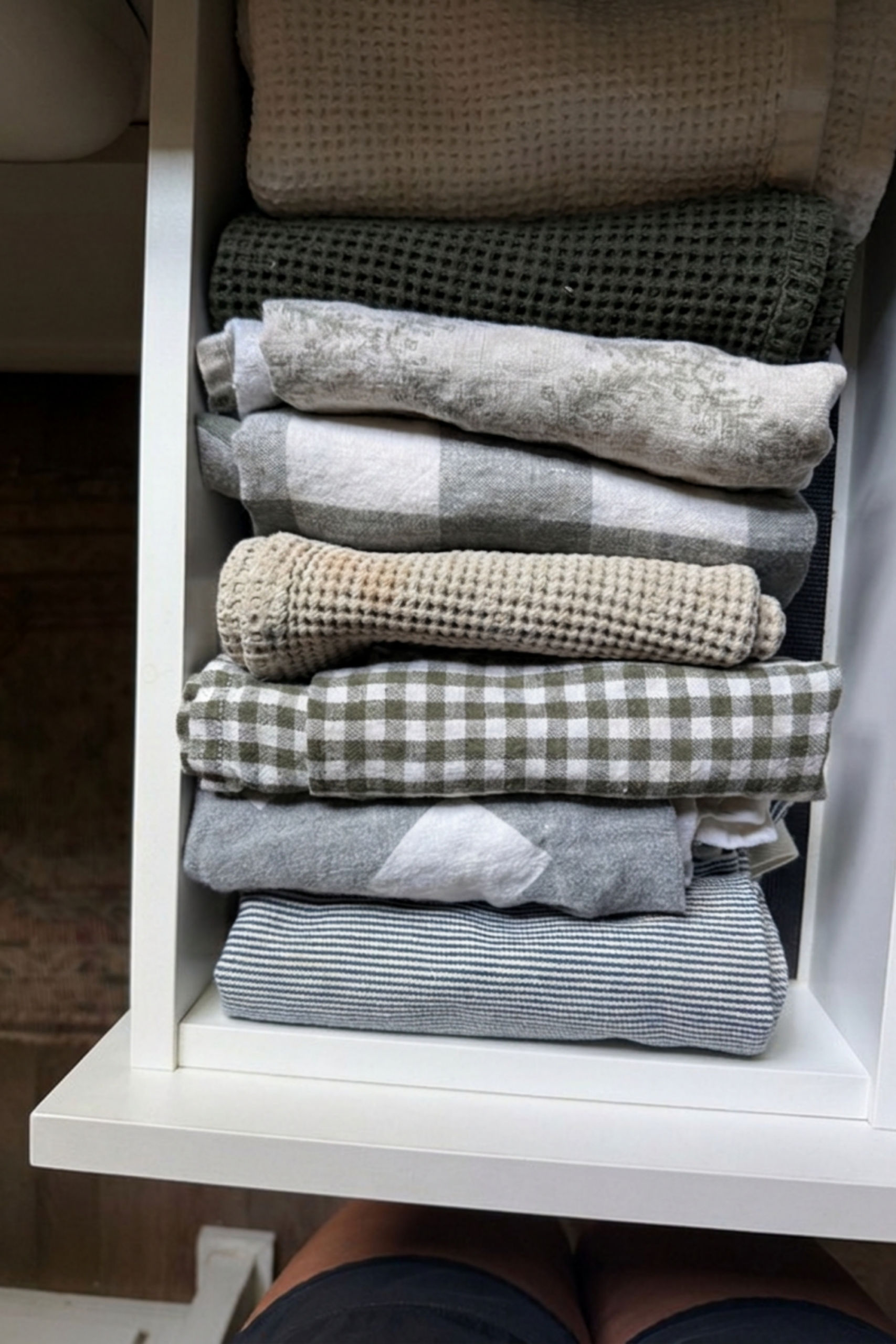
My Favorite Way to Store Kitchen Towels
Instead of folding my tea towels into a traditional stack, I fold and roll each towel individually and store them side-by-side in a drawer.
That’s it. I know, not rocket science but keep reading anyways.
It doesn’t require any special drawer organizers or storage products, and it works beautifully with towels of slightly different sizes and weights.
To organize your own kitchen towels:
- Lay your tea towel flat.
- Fold it lengthwise until you have a long, narrow rectangle.
- Roll the towel snugly from one end to the other.
- Place the rolled towels side-by-side in your drawer.
- Arrange them so you can see each towel at a glance.
I don’t worry about making every roll perfectly uniform. Part of the beauty is seeing all those different textures, patterns and colors tucked together.
Why I Roll My Tea Towels Instead of Stacking Them
For years I simply folded my kitchen towels and stacked them on top of one another. The problem with a traditional stack is that you really only see the towel on top. When you want one farther down, you have to pull it out from underneath the others, which inevitably disrupts the whole pile. And if you’re anything like me, you end up repeatedly using whichever few towels happen to be sitting on top. Rolling solves both problems.
I can see every tea towel I own, and I can remove one without disturbing the others. It also makes it much easier to appreciate a collection of beautiful textiles rather than hiding most of them underneath one another.
Tea Towels Are Meant to Be Used
I’ve always believed the everyday things in our homes are often the ones that eventually mean the most. A tea towel is about as ordinary as it gets. We use them for drying dishes, wiping hands, lining baskets, covering rising dough and cleaning up countless little messes around the kitchen. But over time, those everyday textiles become familiar.
They soften. They fade. They acquire stains and little signs of use. A certain pattern might eventually remind you of a particular kitchen, season or chapter of life. That’s why I don’t believe in saving the “good” tea towels. Use the pretty ones. Beautiful linens aren’t meant to live untouched in a drawer. They’re meant to become part of the rhythm of your home.
What Is the Difference Between a Tea Towel and a Dish Towel?
The terms tea towel, dish towel and kitchen towel are often used interchangeably today, but traditionally there were some differences.
A tea towel was generally a flat-woven cloth made from linen or cotton. Historically, tea towels were used for tasks like drying fine china and glassware, covering baked goods and serving during tea.
A dish towel is a broader term for a towel used for everyday kitchen tasks, particularly drying dishes.
And “kitchen towel” has become something of an umbrella term for both.
I tend to call mine tea towels, especially because I love the traditional flat-woven linen and cotton styles that are as decorative as they are useful.
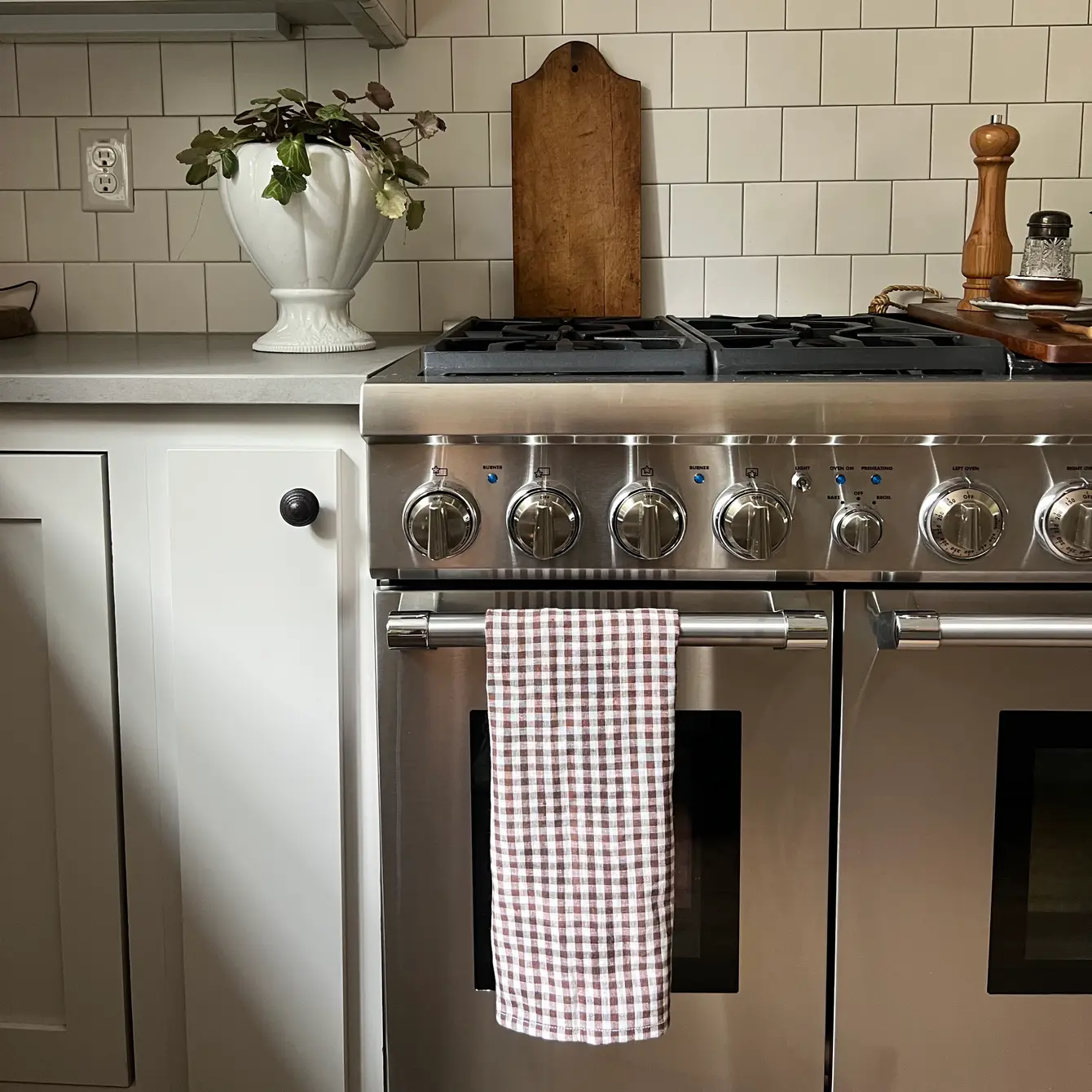
Where Should You Store Kitchen Towels?
A kitchen drawer close to your primary work area is my favorite option. You want your everyday tea towels somewhere convenient enough that you’ll actually reach for them.
If you don’t have drawer space, this same rolled kitchen towel storage method works beautifully in:
- a shallow basket
- a vintage wire basket
- an open shelf
- a pantry basket
- a pretty wooden box
- a deep kitchen cabinet drawer
The important part is keeping the towels visible and accessible rather than creating a perfect organization system that becomes difficult to maintain.
How Many Kitchen Towels Do You Need?
There isn’t a magic number. From a sales person standpoint, I should say a million and shop them all from Heirloomed while you’re at it 🙂 I clearly have more than the bare minimum because textiles are something I love and collect.
For a practical kitchen, I’d rather have enough tea towels to use them freely and wash them frequently than feel like I’m rationing a small collection. it’s sa great way to save on paper towels and be a bit more eco-friendly, while layering beauty into your home for any season.
Keep the ones you love and use. If a towel is worn beyond usefulness, repurpose it as a cleaning rag. If you consistently skip over one because you don’t like it, that’s probably a good indication that it doesn’t need to take up valuable drawer space.
How I Organize Tea Towels by Color and Pattern
I don’t get overly complicated here either. I loosely group mine so the drawer feels visually cohesive, but I don’t maintain a rigid system.
You could organize yours by:
Color: neutrals, blues, greens, seasonal colors.
Pattern: stripes, ginghams, florals and solids.
Use: everyday towels, baking towels, hand towels and special linens.
Season: everyday, fall, Christmas, spring and summer.
Or simply roll them all together, which is essentially what I do. A drawer filled with different woven textures, stripes, checks and florals is pretty enough on its own.
Shop My Favorite Tea Towels
Many of the tea towels you see tucked into my own kitchen are from Heirloomed.
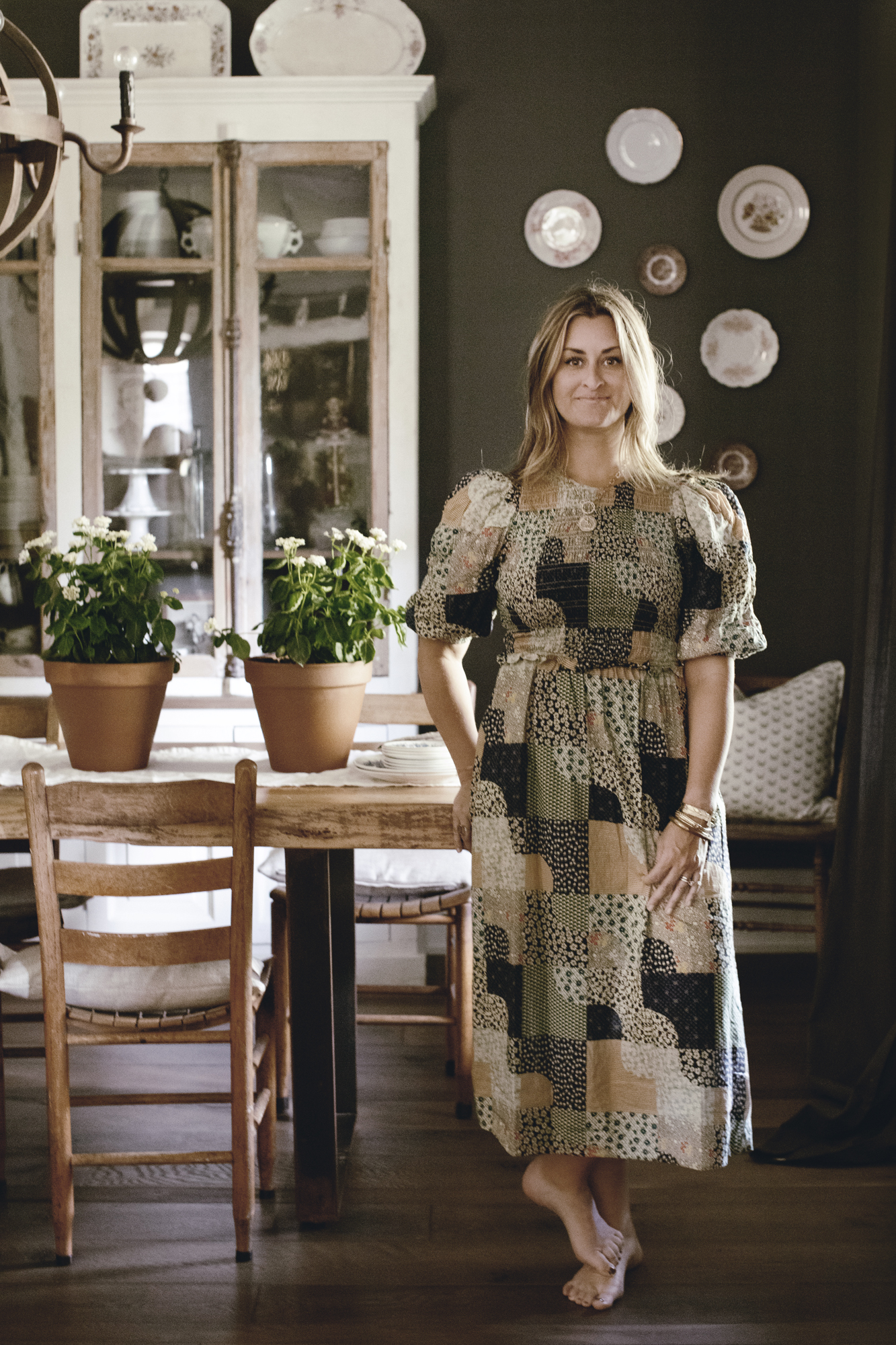
As a textile designer, I’ve always loved creating pieces that feel as though they could have been pulled from your grandmother’s linen drawer, but are made to be used in your home today. I love using my own beacuse then I can photograph them in everyday life and share them on my social media, which I love because our customers get new ideas, see new designs and see that we actually use them in real life.
Classic stripes, ginghams, florals and natural woven textures are intentionally designed to mix together rather than perfectly match. And please don’t save them. Wash them, roll them, use them, stain them, soften them and let them become part of your family’s everyday life. That’s how something new eventually becomes an heirloom.